

 Heavy-Duty Loft Ladder Solutions for Safe and Frequent Home Access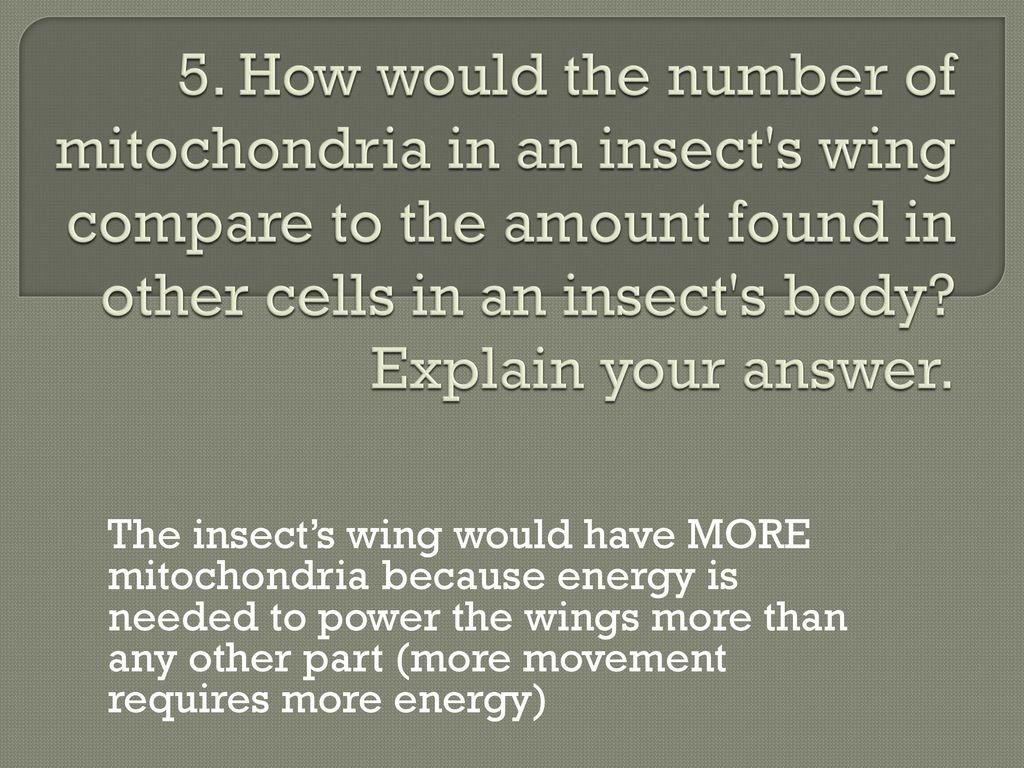
The number of mitochondria in an insect’s wing would astound you. These tiny powerhouses drive the exceptional energy demands of flight. Comparing the number of mitochondria in an insect’s wing to other body parts reveals fascinating insights. Evolution has finely tuned this balance for efficient aerodynamic performance. Let’s delve into the intricate world of insect physiology and uncover the secrets of their remarkable wings.

Exploring the Fascinating World of Mitochondria in Insect Wings
Have you ever wondered what makes an insect’s wings so strong and reliable for their daily flights? The secret lies within tiny powerhouses called mitochondria. These microscopic structures play a vital role in providing energy to the cells, enabling insects to flap their wings with grace and precision. But how do the number of mitochondria in an insect’s wing compare to other parts of their body? Let’s dive into this fascinating topic and uncover the secrets hidden within these miniature energy factories.
The Mighty Mitochondria: Powerhouses of Insect Wings
Mitochondria are like the batteries that power a toy car. They take in nutrients from the food insects eat and convert them into energy that the cells can use. In insect wings, mitochondria are particularly abundant to support the constant movement and energy demands required for flight.
When we examine the number of mitochondria in an insect’s wing, we find that they are densely packed near the muscles responsible for wing movement. This strategic placement ensures that the wings have a constant and efficient energy supply, allowing insects to soar through the air with ease.
Comparing Mitochondria in Insect Wings to Other Body Parts
To understand how the number of mitochondria in an insect’s wing compares to other body parts, let’s take a closer look at the distribution within the insect’s anatomy.
In general, insects have a higher concentration of mitochondria in their flight muscles compared to other tissues. This is because flight muscles require a tremendous amount of energy to sustain the rapid and continuous movement of the wings. As a result, the wings contain a significant number of mitochondria to meet these energy demands.
In contrast, other body parts of insects, such as their antennae or legs, may have fewer mitochondria since they do not require as much energy for basic functions like sensing or walking. The distribution of mitochondria in an insect’s body is finely tuned to meet the specific energy needs of each tissue.
Adaptations for Efficient Energy Production
Insects have evolved remarkable adaptations to maximize the efficiency of energy production in their wings. One such adaptation is the presence of specialized enzymes within the mitochondria that facilitate the breakdown of nutrients and the generation of energy-rich molecules like ATP.
Moreover, the structure of insect wings is designed to optimize airflow and reduce drag during flight, which helps conserve energy. This aerodynamic efficiency, coupled with the high concentration of mitochondria in the wings, allows insects to achieve impressive feats of flight, from intricate aerial maneuvers to long-distance migrations.
The Role of Mitochondria in Insect Wing Development
The number of mitochondria in an insect’s wing is not fixed but can change during different stages of development. For instance, in the early stages of wing growth, the number of mitochondria may increase to support the rapid cell division and tissue expansion required for wing formation.
As the wings mature and become fully functional, the number of mitochondria may stabilize to maintain the energy supply needed for sustained flight. This dynamic regulation of mitochondrial numbers ensures that the wings have the necessary resources to support the insect’s aerial activities throughout its life.
Future Perspectives on Mitochondrial Research in Insect Wings
Despite our current understanding of mitochondria in insect wings, there is still much to explore and discover in this fascinating field of study. Researchers are continually investigating how mitochondrial function adapts to environmental changes, such as temperature fluctuations or nutritional availability, and how these adaptations impact flight performance in insects.
By unraveling the mysteries of mitochondrial dynamics in insect wings, scientists hope to gain insights into the broader implications for energy metabolism, aging, and disease resistance in both insects and other organisms. The tiny mitochondria in insect wings may hold the key to unlocking new possibilities for bio-inspired technologies and sustainable energy solutions.
As we marvel at the intricate workings of mitochondria in insect wings, we are reminded of the incredible diversity and complexity of the natural world. These tiny powerhouses serve as a testament to the remarkable adaptations that enable insects to conquer the skies and thrive in their environments. Next time you see a butterfly fluttering by or a dragonfly darting overhead, take a moment to appreciate the unseen marvels happening within their delicate wings.
Tardigrade at 0x, 40x, 100x and 400x magnification!
Frequently Asked Questions
How do the number of mitochondria in an insect’s wing vary based on their size?
In general, larger insects tend to have a greater number of mitochondria in their wings compared to smaller insects. This is because larger insects require more energy to support their greater muscle mass and higher metabolic rate, thus needing more mitochondria to produce the necessary ATP for energy.
What role do mitochondria play in an insect’s wing function?
Mitochondria are the powerhouse of a cell and are responsible for generating energy in the form of ATP through aerobic respiration. In an insect’s wing, mitochondria provide the energy needed for flight, which is a highly energy-demanding activity. They play a crucial role in powering the wing muscles to enable flight.
How do environmental factors impact the number of mitochondria in an insect’s wing?
Environmental factors such as temperature, altitude, and available food sources can influence the number of mitochondria in an insect’s wing. For example, in colder environments, insects may need to produce more heat to maintain their body temperature, leading to an increase in mitochondria for energy production.
Do different species of insects have varying numbers of mitochondria in their wings?
Yes, different species of insects can have varying numbers of mitochondria in their wings based on their unique physiological requirements. For example, migratory insects that need to fly long distances may have a higher density of mitochondria in their wings to sustain prolonged flight, while other insects with different flight behaviors may have lower numbers.
Final Thoughts
In conclusion, the number of mitochondria in an insect’s wing is significantly higher compared to other tissues. Mitochondria are the powerhouse of a cell, providing energy for flight muscles. This high abundance of mitochondria allows insects to meet the energy demands of their rapid wing movements efficiently. Understanding how the number of mitochondria in an insect’s wing compare helps researchers unravel the unique adaptations that enable insects to fly with such agility.